Pepper and Peppercorn
Frequently Asked Questions
Check back for updates and new info. With the rise of the internet, websites, social media, and AI (artificial intelligence), inaccurate information is created, repeated, and widely distributed with ease and often with an undeserved air of authority. The information presented here is based on reliable sources, recognized experts, and published books. If you find something you believe is incorrect or disagree with, please contact me and let me know.
Frequently Asked Questions.
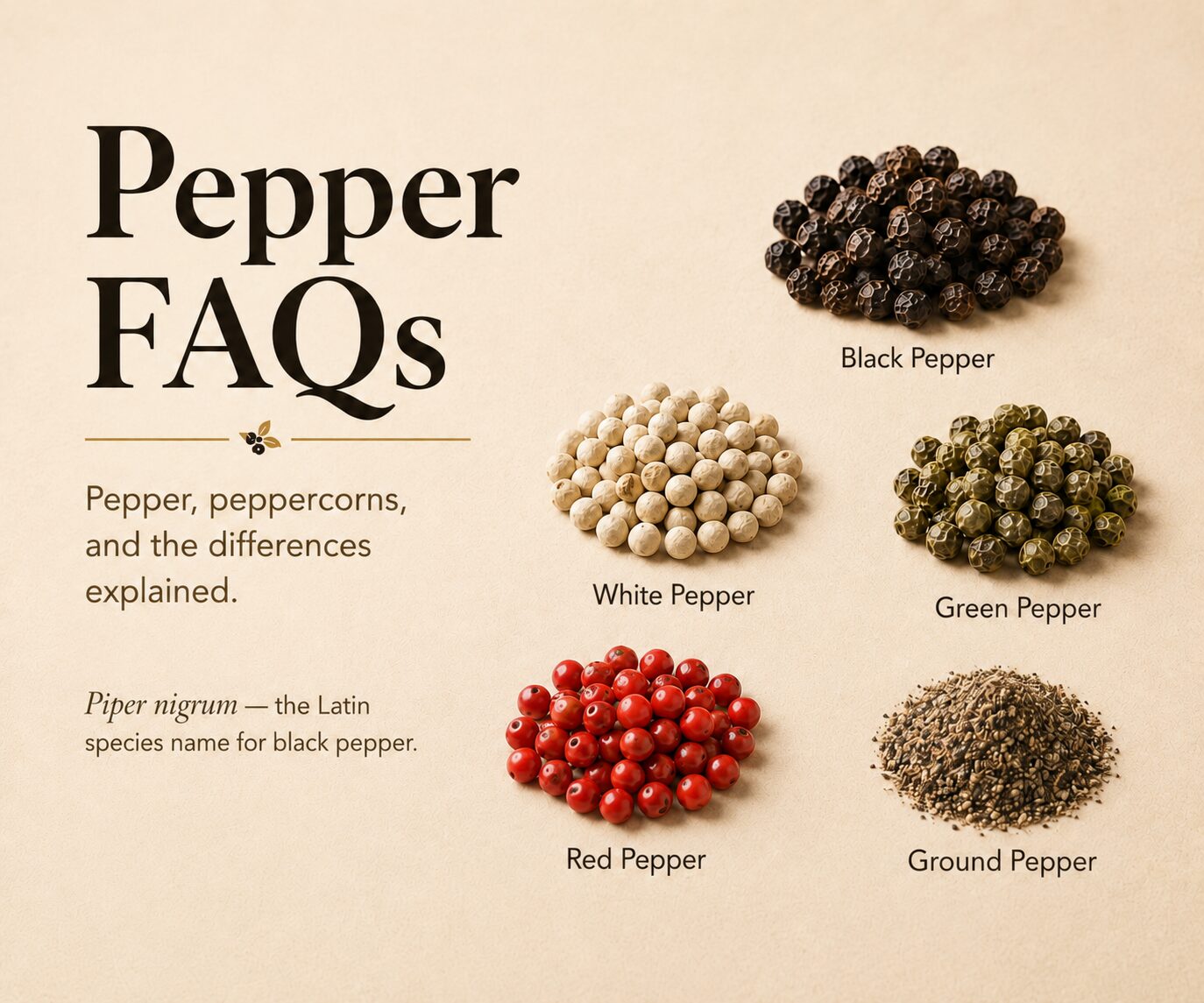
Peppercorns are the small fruits of Piper nigrum, a tropical flowering vine. A peppercorn is botanically a fruit because it develops from the flower of the Piper nigrum plant and contains a seed. After it is harvested and dried, it is used as a spice. The fruits grow in clusters and are harvested and processed in different ways to produce black, white, green, and red peppercorns. Although they may look like seeds, peppercorns are technically dried fruits, each containing a single seed.
Peppercorns first come from the Piper nigrum plant, a tropical flowering vine. Today, they are grown in many warm, humid regions around the world, especially in South and Southeast Asia, as well as parts of Africa and South America. The most biggest commercial producers are Vietnam, Brazil, Indonesia, India, Sri Lanka and Malaysia. Several smaller pepper-producing countries are especially well known for the distinctive taste and aroma of their peppercorns. Their unique soil, climate, elevation, rainfall, and growing traditions—collectively known as terroir—can give the pepper a character that is closely associated with its place of origin.
Terroir, a French word, pronounced tehr-WAHR It is the combination of environmental conditions and local growing practices that gives an agricultural product its distinctive character. It includes the soil, climate, rainfall, elevation, sunlight, drainage, surrounding ecosystem, and the knowledge and traditions of the people who grow and process the crop.
The term is most closely associated with wine. Grapes of the same variety can produce noticeably different wines when grown in different regions because each vineyard has its own climate, soil, topography, and growing conditions. Wine experts often describe terroir as a “sense of place” that can be tasted in the finished wine.
The same idea applies to peppercorns. Peppercorns of the same species may develop different aromas, flavors, heat levels, and complexity depending on where and how they are grown. Just as a wine can reflect the character of a particular vineyard, a peppercorn can reflect the character of its region of origin.
Peppercorns are the whole dried fruits of the *Piper nigrum* vine. Ground black pepper is simply black peppercorns that have been crushed or ground to different sizes.
Common grinds include coarse, cracked, medium, fine, and extra-fine. Coarse or cracked pepper gives a stronger texture and is often used on steaks, roasted meats, and spice rubs. Medium grind is common for general cooking, while fine and extra-fine pepper blend more evenly into sauces, soups, dressings, and prepared foods.
Whole peppercorns retain their aroma and flavor longer because their flavorful oils remain protected inside the fruit. Once ground, those oils are exposed to air and begin to lose strength more quickly. For the freshest flavor, grind whole peppercorns just before use.
Black Peppercorns
Black peppercorns are produced from fully developed green fruits of the Piper nigrum vine that are harvested before they fully ripen. As the fruits dry, their outer skins darken and wrinkle, creating the familiar black peppercorn.
White Peppercorns
White peppercorns come from the same Piper nigrum plant, but they are usually harvested when the fruits are more mature. Water is often used to remove the outer fruit layer, leaving the pale inner seed. Several different water-based and mechanical processing methods are used to remove the outer fruit layer. Differences in the method, the water source, soaking time, fermentation, cleanliness, and drying method affect the pepper’s final flavor and aroma. Processors also produce white pepper by mechanically removing the outer layers from dried peppercorns. White pepper usually has a smoother, earthier flavor and is often used in light-colored sauces, soups, mashed potatoes, and other dishes where visible black specks are not desired.
Green peppercorns
Green peppercorns are harvested while the fruits of the Piper nigrum vine are still green and have not fully ripened. Because fresh green peppercorns are highly perishable, they must be used quickly or preserved soon after harvest.
They are most commonly preserved in one of three ways:
Brining or pickling: Fresh green peppercorns are packed in saltwater, vinegar, or an acidified brine. This keeps them soft and gives them a fresh, mildly pungent, and sometimes slightly tangy flavor.
Freeze-drying: Moisture is removed at low temperature, helping preserve the peppercorns’ green color, shape, and fresh aroma. Freeze-dried peppercorns are light and crisp but soften when rehydrated.
Controlled drying or dehydration: Green peppercorns may also be dried using carefully controlled heat and airflow. The drying method affects their final color, aroma, texture, and flavor.
Fresh green peppercorns may also be frozen or canned, but brining, freeze-drying, and dehydration are the most commonly recognized commercial preservation methods.
Red Peppercorns
Red peppercorns are the fully ripe fruits of the Piper nigrum vine. They are left on the vine until they turn red, then carefully harvested and dried with the outer fruit layer intact. Because ripe pepper fruits are delicate and often ripen unevenly, true red peppercorns are less common than black, white, or green varieties. Their flavor is typically fruity, aromatic, and slightly sweet, while still retaining the characteristic heat of black pepper. True red peppercorns should not be confused with pink peppercorns, which usually come from a different plant.
Red peppercorns are the fully ripe fruits of the Piper nigrum vine. Unlike black peppercorns, which are harvested while the fruits are still green, red peppercorns remain on the vine until they mature and turn red.
After harvesting, the ripe red fruits are carefully dried while their outer fruit layer remains intact. Because the red color is easily damaged by excessive heat, drying must be carefully controlled. Some red peppercorns may also be preserved in brine or sold salted rather than completely dried.
True red peppercorns are relatively rare because the fruits ripen unevenly along each spike and must often be selected individually. They generally have a rounder, fruitier, and somewhat sweeter flavor than black peppercorns while retaining the characteristic pungency of Piper nigrum.
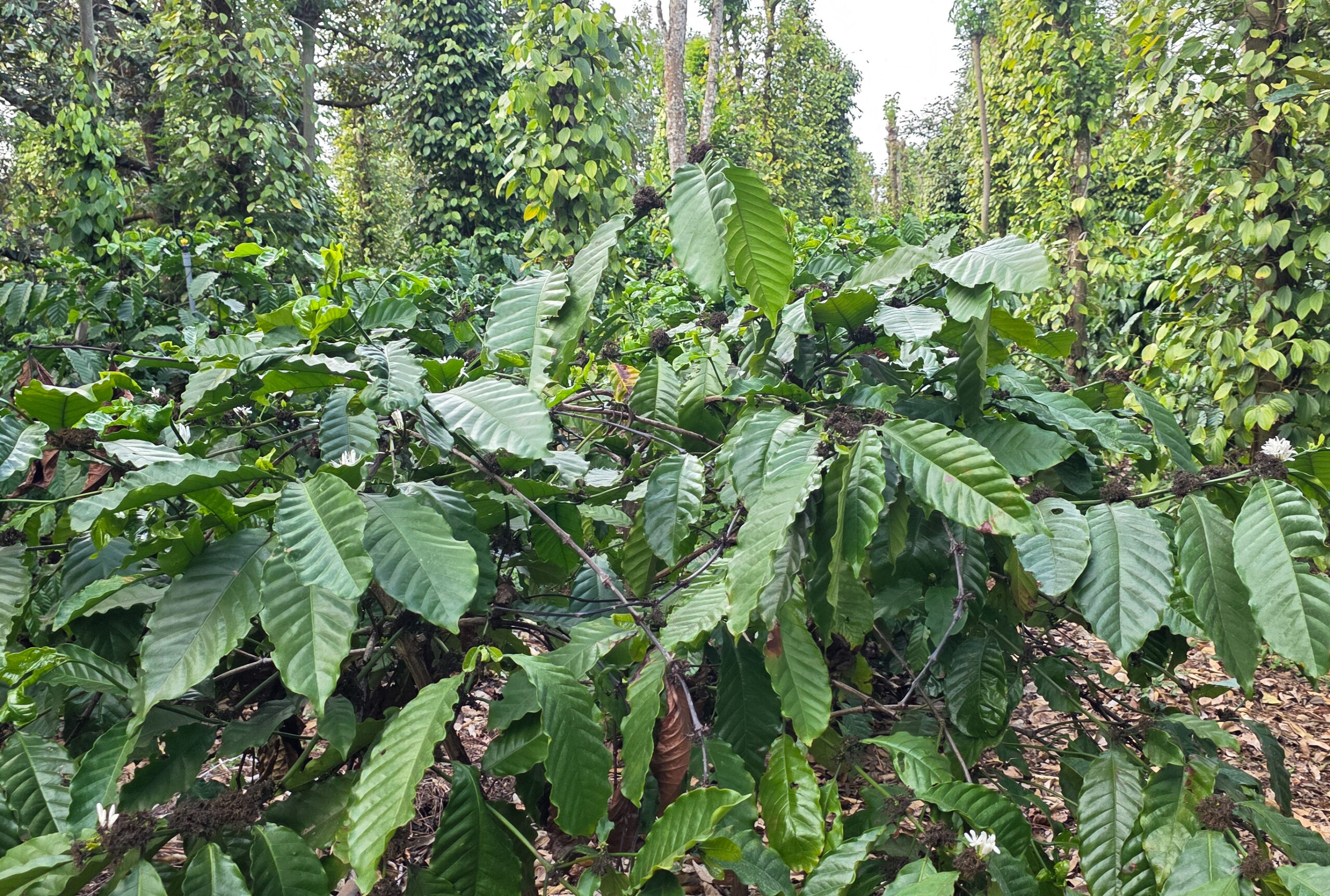
The video above shows me walking through a pepper farm in Đắk Lắk, Vietnam, where pepper vines can be seen climbing and growing along the support trees.
A word about pink and red peppercorns—and Sichuan pepper.
There is considerable confusion surrounding peppercorns that are not black, white or green, especially pink peppercorns, red peppercorns, and the flaky husks sold as Sichuan pepper.
True red peppercorns come from Piper nigrum, the same plant that produces black, white, and green peppercorns. Pink peppercorns from Brazil come from an entirely different plant species. The Brazilian plant is the Brazilian peppertree, scientifically named Schinus terebinthifolia. It belongs to the Anacardiaceae, or cashew and sumac family. Sichuan pepper, known for the tingling or numbing sensation it creates in the mouth, also comes from a completely different plant.
Sichuan pepper comes from thorny shrubs or small trees in the Zanthoxylum genus, especially Zanthoxylum bungeanum and Zanthoxylum armatum in China. These plants belong to the Rutaceae, or citrus family, not the true-pepper family.
The Sichuan spice is primarily the dried outer fruit husk, not the hard black seed inside. Although strongly associated with Sichuan cuisine, it is used worldwide.
Some sellers may even color white peppercorns red to make them appear to be genuine red Piper nigrum peppercorns. For that reason, I generally recommend avoiding premixed peppercorn blends. Purchase authentic red peppercorns from a reputable source, such as Authentic Origin Spices, and create your own blend. Some people enjoy the commercial mixes, but it is important to understand what they may contain. Anyone with a cashew allergy should be especially cautious when consuming pink peppercorns.

The young woman, standing in the grove of pepper vines, wearing the red-and-green áo dài, is a Vietnamese friend of mine. She grew up on a farm and served as my guide and interpreter during my trips to Vietnam to source peppercorns.
Whenever you see a bag of Viet Highlands Đắk Lắk Noir Peppercorns, you will recognize the brand by her image on the front of the package.
Peppercorns grow on woody climbing vines, not on trees.
The black pepper plant, Piper nigrum, climbs up support trees, posts, or trellises. The peppercorns develop in clusters on the vine, which can make them look as though they are growing directly on the tree. The most common method is to grow pepper vines on fast-growing support trees, although some countries use concrete columns instead, which is generally not an ideal approach.
In the United States, most packaged foods, including whole peppercorns, are not required to display an expiration or quality date. However, it is common practice to include a “Best By” date. The manufacturer gets to choose this date.
Authentic Origin Spices establishes this date based on how long the peppercorns are expected to retain acceptable aroma, flavor, moisture, appearance, and overall quality. Because we package our peppercorns fresh and use high-quality protective packaging, they should maintain their quality for approximately three to five years when stored in a cool, dry, dark place.
Yes. I eat whole peppercorns all the time to test for freshness and the full flavor. Returning to the concept of terroir, every peppercorn has its own subtle flavor characteristics. Crushing a whole peppercorn in your mouth allows you to fully experience and appreciate the nuanced flavors that distinguish one variety or origin from another.
Whole black peppercorns are edible and may be chewed, crushed, or cooked whole in soups, sauces, marinades, and pickling mixtures. However, they are hard and intensely flavored. Chew them thoroughly rather than swallowing them like pills. Whole peppercorns can present a choking or aspiration risk, particularly for young children and people with swallowing difficulties. Brined or preserved green peppercorns are often soft and flavorful enough to eat whole with a wide variety of foods. Experiment with different dishes and discover what you enjoy most.
There is no single country that can objectively claim to produce the world’s best peppercorns. National pride and regional tradition often lead producers and consumers to favor pepper from their own country, but quality varies considerably from one farm, harvest, and processor to another.
Vietnam’s Central Highlands, including Đắk Lắk, produce large, dense peppercorns known for bold aroma, strong heat, and robust flavor. Cambodia is famous for protected Kampot pepper, which is valued for its distinctive regional character. India, the historic home of *Piper nigrum*, is known for Malabar pepper and Tellicherry grades, which consist of especially large, mature peppercorns. Sri Lankan pepper is often recognized for its strong pungency, high piperine content, and citrusy or floral aroma. Brazil is also a major producer capable of supplying excellent peppercorns, although quality can vary significantly between growers and processors.
Ultimately, the best peppercorn is not determined by a country’s flag or reputation alone. Terroir, variety, ripeness at harvest, density, processing, cleanliness, freshness, and storage all influence the final flavor. The best peppercorn is the one that delivers the aroma, heat, and flavor you enjoy most.
In my opinion, a well-equipped kitchen should have three or four pepper grinders, each filled with a different peppercorn. That allows you to choose the best pepper for the dish based on the flavor, aroma, pungency, and overall effect you want to achieve. Try Viet Highlands Dak Lak Noir Whole Peppercorns.
Short answer: a whole peppercorn protects its flavor inside. Grinding releases that flavor, but the clock immediately begins ticking.
Longer answer:
Freshly ground pepper tastes better because grinding breaks open the peppercorn and releases its aromatic oils. These oils create the bright, citrusy, floral, woody, and earthy flavors that make high-quality pepper distinctive.
Once pepper is ground, much more of it is exposed to air. Its aromatic compounds begin to evaporate and oxidize, while heat, light, and storage gradually make the flavor flatter and less complex. Piperine, the compound responsible for pepper’s heat, lasts longer than many of the aroma compounds. This is why older pre-ground pepper may still taste sharp or bitter but lack the rich aroma and nuanced flavor of freshly ground pepper. A whole peppercorn naturally protects its flavor. Grinding releases that flavor—but the moment it is ground, the clock starts ticking.
Grams per liter, abbreviated **g/L**, measures the bulk density of whole peppercorns. In simple terms, it tells you how much one liter of peppercorns weighs. The higher the number, the denser and more fully developed the peppercorns generally are.
Density is important because heavier peppercorns usually contain fewer hollow, immature, or poorly developed berries. They often provide better flavor, aroma, and overall quality. However, density is only one part of grading. Moisture, cleanliness, freshness, piperine content, aromatic oils, and processing methods also affect the quality of the finished pepper.
Under the Codex international standard, whole black pepper is generally graded as follows:
**Grade I:** at least 550 g/L
**Grade II:** at least 500 g/L
**Grade III:** at least 400 g/L
Commercial pepper is also commonly sold using density specifications such as 500, 550 and 570 g/L. These numbers are quality specifications, not different varieties of pepper.
**Viet Highlands Đắk Lắk Noir Peppercorns are graded at 570+ g/L.** This places them well above the minimum density required for Grade I pepper and indicates a carefully selected crop of dense, mature, well-developed peppercorns. Combined with proper harvesting, cleaning, processing, and fresh packaging, a 570+ g/L rating is a strong indicator of exceptional whole black pepper. Click here to buy a bag

Short answer: a whole peppercorn protects its flavor inside. Grinding releases that flavor, but the clock immediately begins ticking.
Longer answer:
Freshly ground pepper tastes better because grinding breaks open the peppercorn and releases its aromatic oils. These oils create the bright, citrusy, floral, woody, and earthy flavors that make high-quality pepper distinctive.
Once pepper is ground, much more of it is exposed to air. Its aromatic compounds begin to evaporate and oxidize, while heat, light, and storage gradually make the flavor flatter and less complex. Piperine, the compound responsible for pepper’s heat, lasts longer than many of the aroma compounds. This is why older pre-ground pepper may still taste sharp or bitter but lack the rich aroma and nuanced flavor of freshly ground pepper. A whole peppercorn naturally protects its flavor. Grinding releases that flavor—but the moment it is ground, the clock starts ticking.
Black pepper’s heat comes mainly from piperine, a natural compound that activates heat-sensitive receptors in the mouth. Your brain interprets that stimulation as warmth or mild burning, even though the food itself is not hotter.
Pepper also contains aromatic oils that produce citrusy, floral, woody, and earthy notes. Because much of what we experience as taste actually comes from smell and aroma, these oils add depth and complexity to food.
Together, piperine and pepper’s natural aromas can brighten mild foods, balance rich dishes, and make other flavors seem more noticeable. Freshly ground pepper has the strongest effect because grinding releases those aromatic oils immediately.
What are the Potential Health Benefits? Why Choosing Fresh, High-Quality Peppercorns Matters.
Freshness and quality directly affect black pepper’s flavor, aroma, essential oils, and naturally occurring compounds.
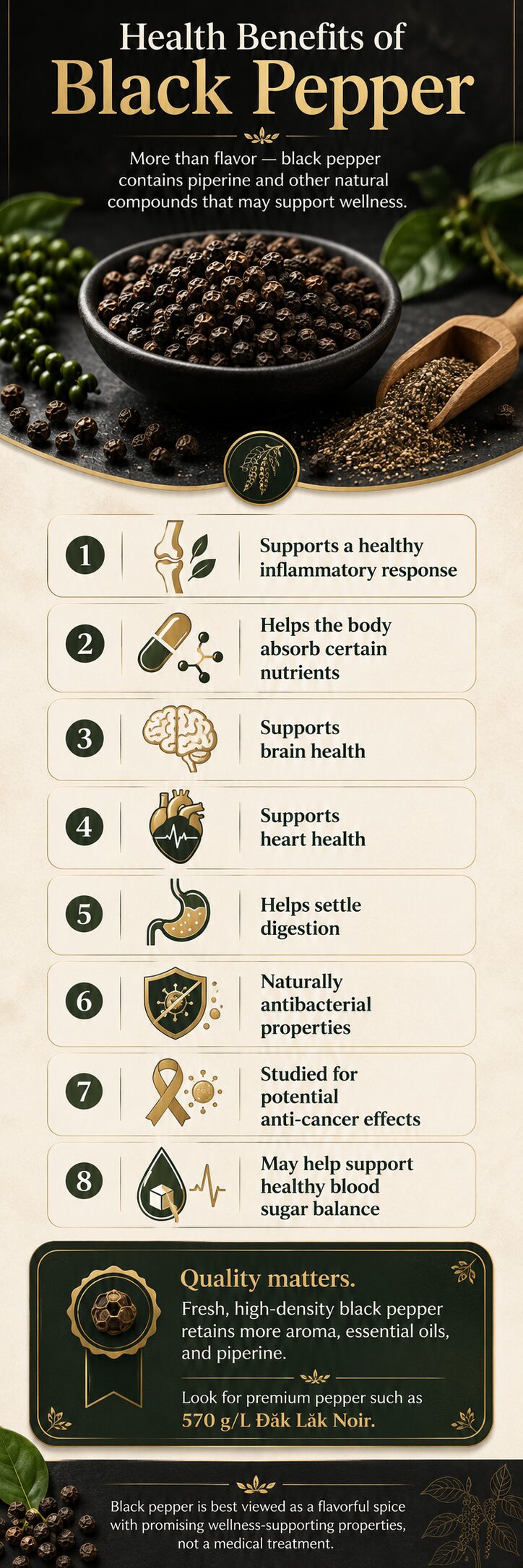
I’ve saved the longest, most controversial, and perhaps most important frequently asked question for last: What are the health benefits of black pepper?
Before examining the research, it is important to remember that pepper quality matters. Fresh, high-density peppercorns retain more of their natural aroma, essential oils, pungency, and flavor than old, lightweight, or poorly stored pepper. A pepper such as Viet Highlands Đắk Lắk Noir, graded at 570 grams per liter, represents the kind of dense, fresh, high-quality black pepper you should look for when choosing pepper for both culinary use and its naturally occurring compounds. Sources at the end.
Black pepper is the most common spice in kitchens worldwide, but it’s much more than a flavor enhancer. Nicknamed the “king of spices,” it’s been used in traditional medicine for thousands of years, and modern research is starting to catch up with what Ayurvedic practitioners have long known.
What makes black pepper good for you?
The star of the show is piperine, the compound that gives black pepper its signature kick. Piperine is what’s behind most of black pepper’s antioxidant, anti-inflammatory, and absorption-boosting effects. Black pepper also contains volatile oils, oleoresins, and other alkaloids that contribute to its health properties.
How does black pepper act as an antioxidant?
Piperine is a powerful free-radical scavenger. Free radicals are unstable molecules that damage cells and are linked to aging and chronic diseases. By neutralizing these, black pepper may help protect against conditions like atherosclerosis, diabetes, and certain cancers. Its phenolic compounds also help stop fats from breaking down (a process called lipid peroxidation) in the body.
Can black pepper help with inflammation?
Yes, piperine has shown real promise as an anti-inflammatory. In animal studies, it reduced markers of inflammation and eased joint swelling. There’s even a study where black pepper, combined with turmeric and ginger, produced anti-inflammatory effects on par with prescription medication for people with knee osteoarthritis. While more human research is still needed, the early signs are encouraging.
I’ve heard black pepper helps you absorb other nutrients. Is that true?
This is probably black pepper’s best-documented benefit. Piperine dramatically improves how well your body absorbs certain nutrients and supplements:
Curcumin (from turmeric) — absorption increased by up to 2,000%
Beta-carotene — significantly better uptake
Selenium and iron — improved absorption
Vitamin B6, CoQ10, and resveratrol — all more bioavailable
Piperine does this by slowing down the liver and intestinal enzymes that would normally break these compounds down before your body can use them. That’s why so many turmeric supplements now include black pepper extract.
Does black pepper support brain health?
Research suggests piperine may protect the brain by reducing neuroinflammation and shielding the hippocampus, the area responsible for memory and spatial navigation. It also shows potential against Alzheimer’s and Parkinson’s-related symptoms and appears to inhibit enzymes that contribute to nerve degeneration. It’s an exciting area of study, though still mostly in the preclinical stage.
Is black pepper good for your heart?
It can be. Black pepper helps improve cholesterol by lowering total cholesterol, LDL (“bad”) cholesterol, and triglycerides while raising HDL (“good”) cholesterol. Piperine has also been shown to reduce blood pressure and protect against cardiac damage and the progression of atherosclerosis. These effects make it a promising addition to a heart-friendly diet.
What about digestion?
Black pepper has been used to settle the stomach for centuries, and science backs it up. Piperine stimulates the pancreas to release digestive enzymes, increases stomach acid secretion, and speeds up the passage of food through the digestive tract. This can improve digestion, boost appetite, and help your body break down and absorb nutrients more efficiently.
Does black pepper have antibacterial properties?
Yes. Black pepper and piperine have been shown to inhibit a range of bacteria, including Staphylococcus aureus, Bacillus subtilis, Salmonella, and Proteus mirabilis. They work by disrupting bacterial biofilms and motility, which makes it harder for harmful bacteria to take hold.
Can black pepper help fight cancer?
Piperine has demonstrated anticancer effects in lab studies against cell lines from breast, colon, cervical, and prostate cancers. It appears to work by triggering apoptosis (cell death) and interfering with cancer cell signaling pathways. This is promising but still in the early, lab-based stages, so it’s not a treatment, more a reason to keep an eye on the research.
Does black pepper help with blood sugar?
Early evidence suggests it may. Animal studies have shown antidiabetic effects from black pepper, and it shows potential for helping regulate blood sugar levels. More human studies are needed to confirm how significant this effect is.
Is black pepper safe to eat every day?
For most people, yes. Using black pepper in normal cooking amounts is completely safe and may even offer some health benefits over time. However, taking very large amounts of black pepper or concentrated piperine supplements can irritate the stomach lining. If you’re on prescription medications, talk to your doctor before taking piperine supplements, since piperine can affect how your body metabolizes certain drugs.
How much black pepper do I need to get these benefits?
You don’t need much. A few turns of the pepper mill over your meals is enough to enhance the absorption of nutrients like curcumin. For more concentrated or therapeutic effects, piperine supplements are available, but those are best discussed with a healthcare provider.
The bottom line
Black pepper is far more than a pantry staple. Its active compound, piperine, offers antioxidant, anti-inflammatory, brain-protective, heart-healthy, digestive, and antimicrobial benefits, and it’s one of the most effective natural ways to boost how well your body absorbs other nutrients. Most of the strongest evidence so far comes from animal and lab studies, so while it’s a genuinely beneficial spice to include in your diet, think of it as a healthy addition to a balanced lifestyle rather than a medicine.
Sources
Black pepper and health claims: a comprehensive treatise — PubMed
A systematic review on black pepper (Piper nigrum L.) — PubMed
Black pepper and its pungent principle-piperine: a review — PubMed
Piperine, Black Pepper (Piper nigrum) — Restorative Medicine
Cardiovascular protective effect of black pepper and piperine — ScienceDirect
Bioactive Properties, Bioavailability Profiles, and Clinical Evidence — Molecules (PMC)
Neuroprotective Effects of Black Pepper and Its Bioactive Compounds — Aging and Disease (PMC)
Black pepper: Nutrition and health benefits — Medical News Today
Black pepper’s heat comes mainly from piperine, a natural compound that activates heat-sensitive receptors in the mouth. Your brain interprets that stimulation as warmth or mild burning, even though the food itself is not hotter.
Pepper also contains aromatic oils that produce citrusy, floral, woody, and earthy notes. Because much of what we experience as taste actually comes from smell and aroma, these oils add depth and complexity to food.
Together, piperine and pepper’s natural aromas can brighten mild foods, balance rich dishes, and make other flavors seem more noticeable. Freshly ground pepper has the strongest effect because grinding releases those aromatic oils immediately.
Curious what’s behind the QR code?
Scan the code on your bag—or click the button to the left — to explore special offers, pepper stories, origin information, and more.